End of the Line, For Now
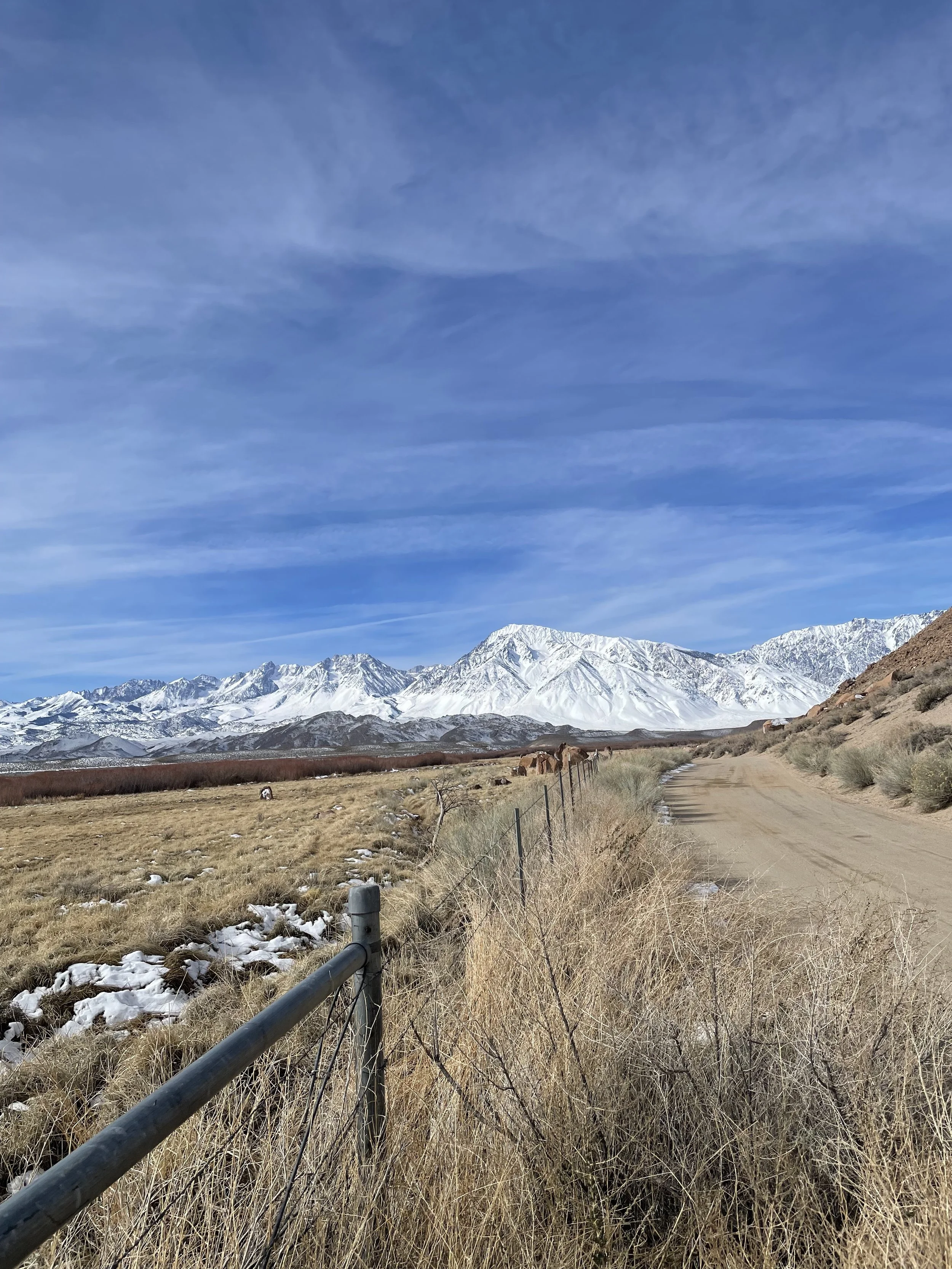
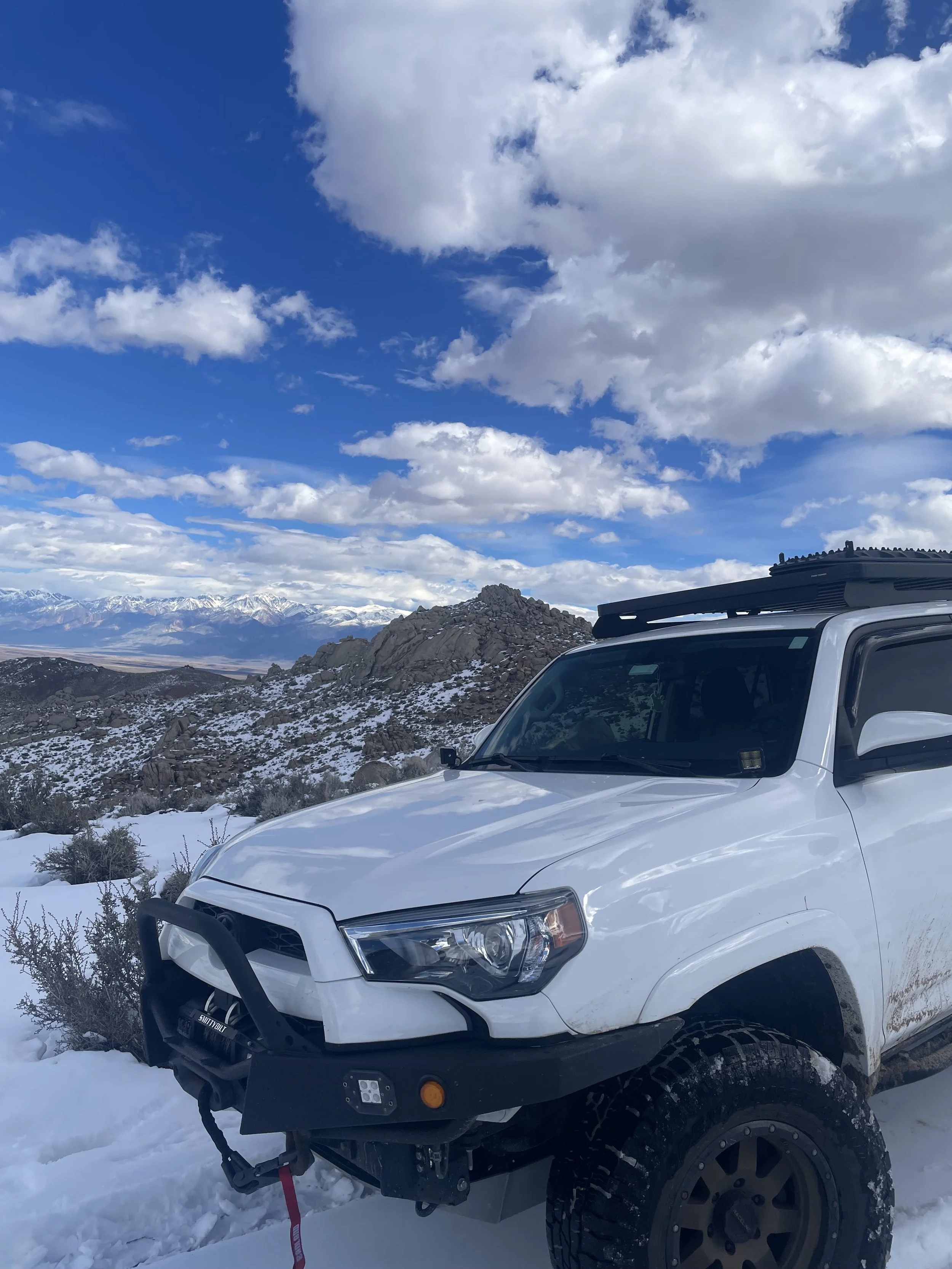
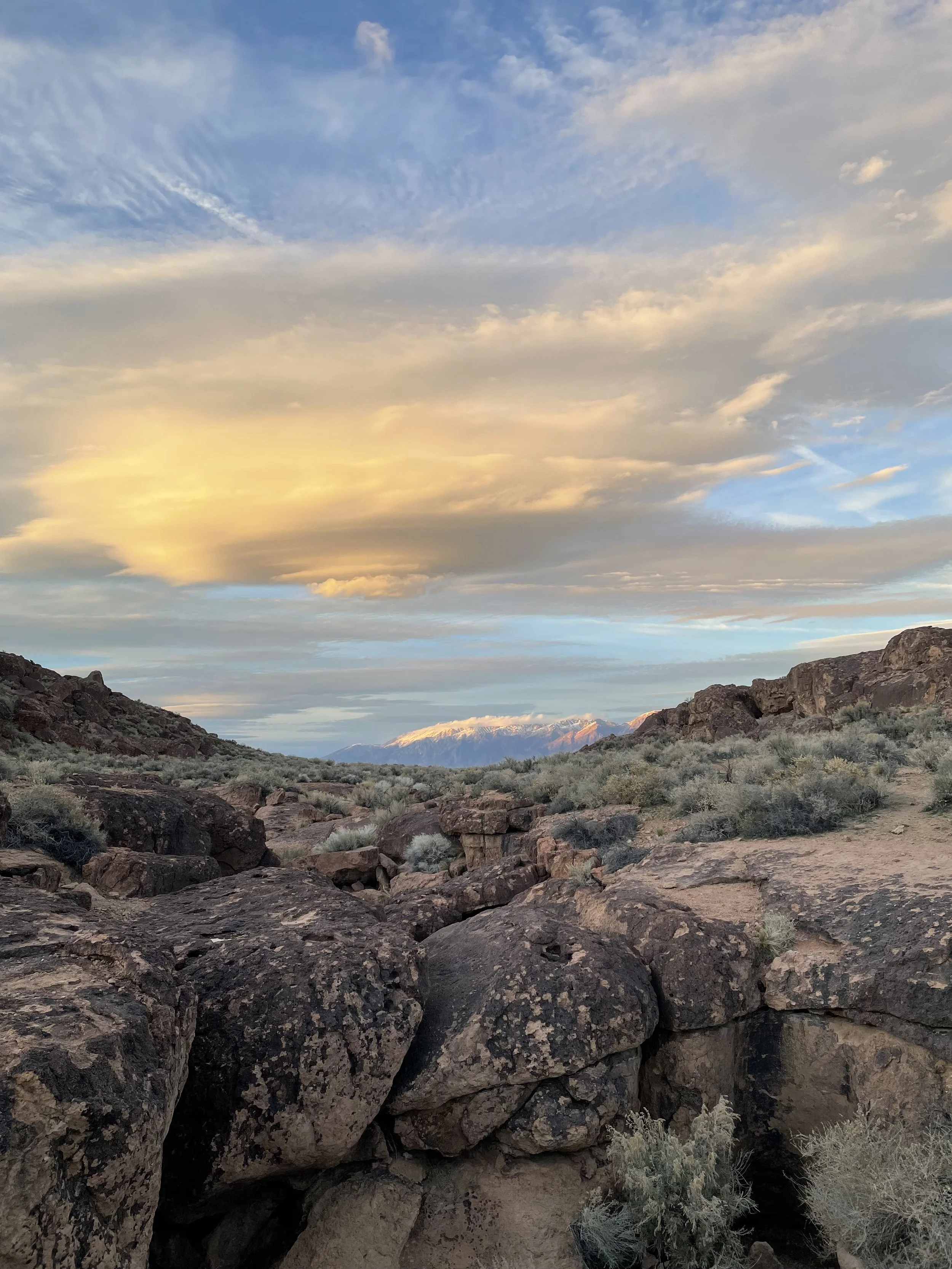
Bishop, California—the last stop. First visit, but you understand almost immediately that you’ll be back. A storm had moved through a few days before. Its residue was everywhere. Snow pushed up against curbs and parking lots in gray-edged berms, the sort that look stubborn until you remember where you are. High desert sun is not sentimental. Give it twenty-four hours.
By the time you reach the last stop of a trip like this, you’re operating on a different accounting system. The careful conservation that marks the early weeks—taping early, backing off problems before the burn sets in—quietly dissolves. You saved something for this stop, and now the logic is simple: spend it.
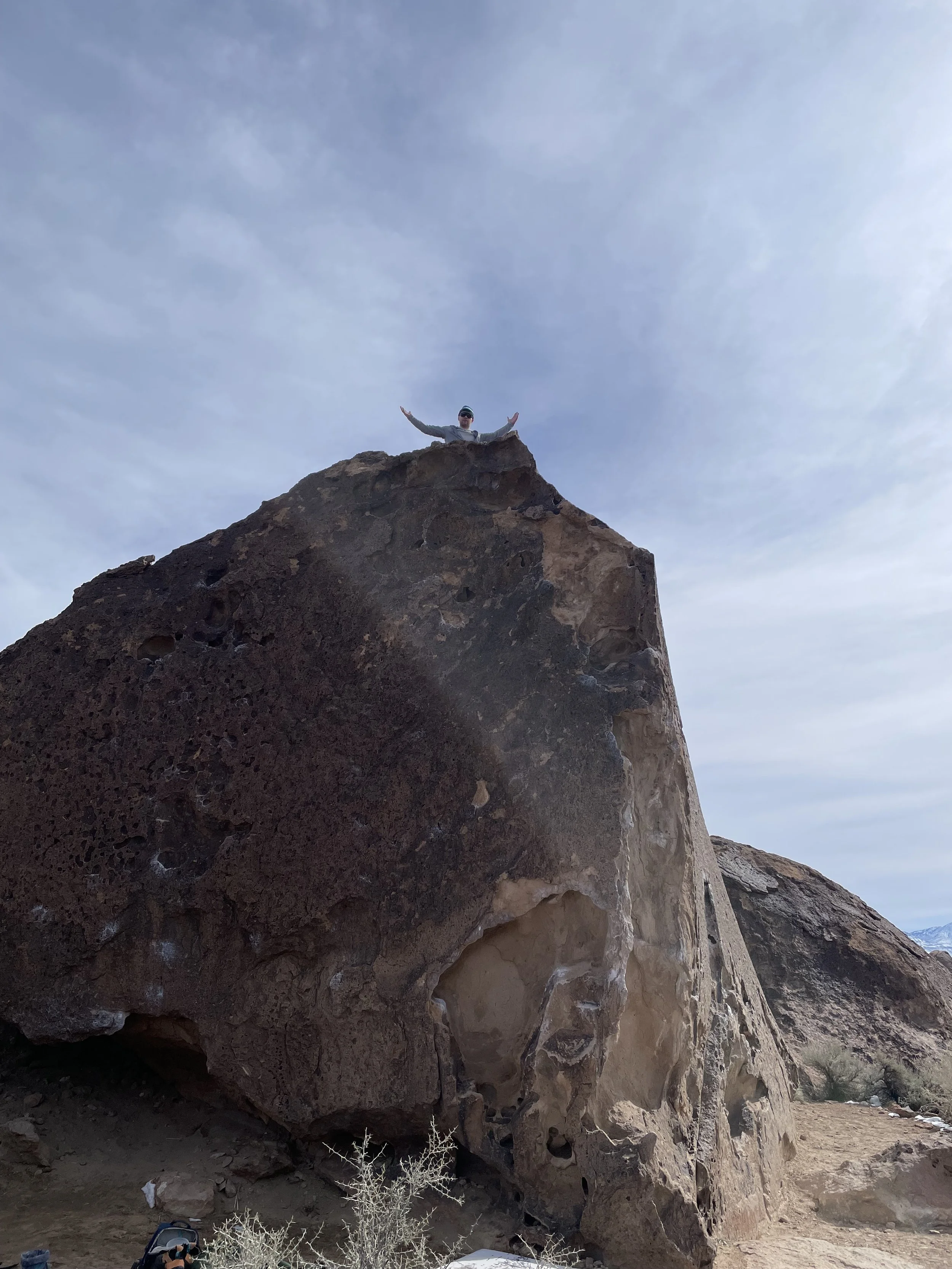
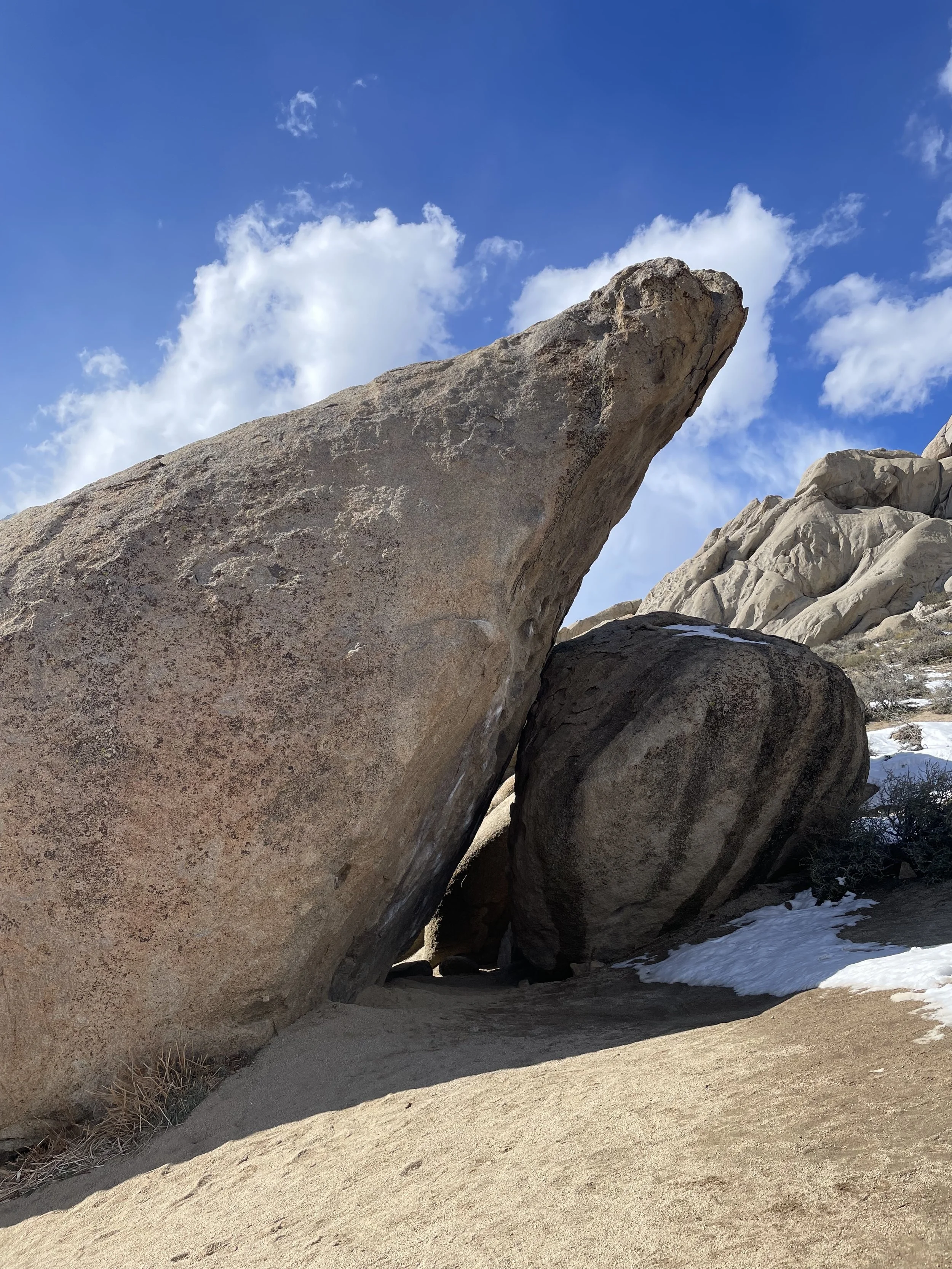
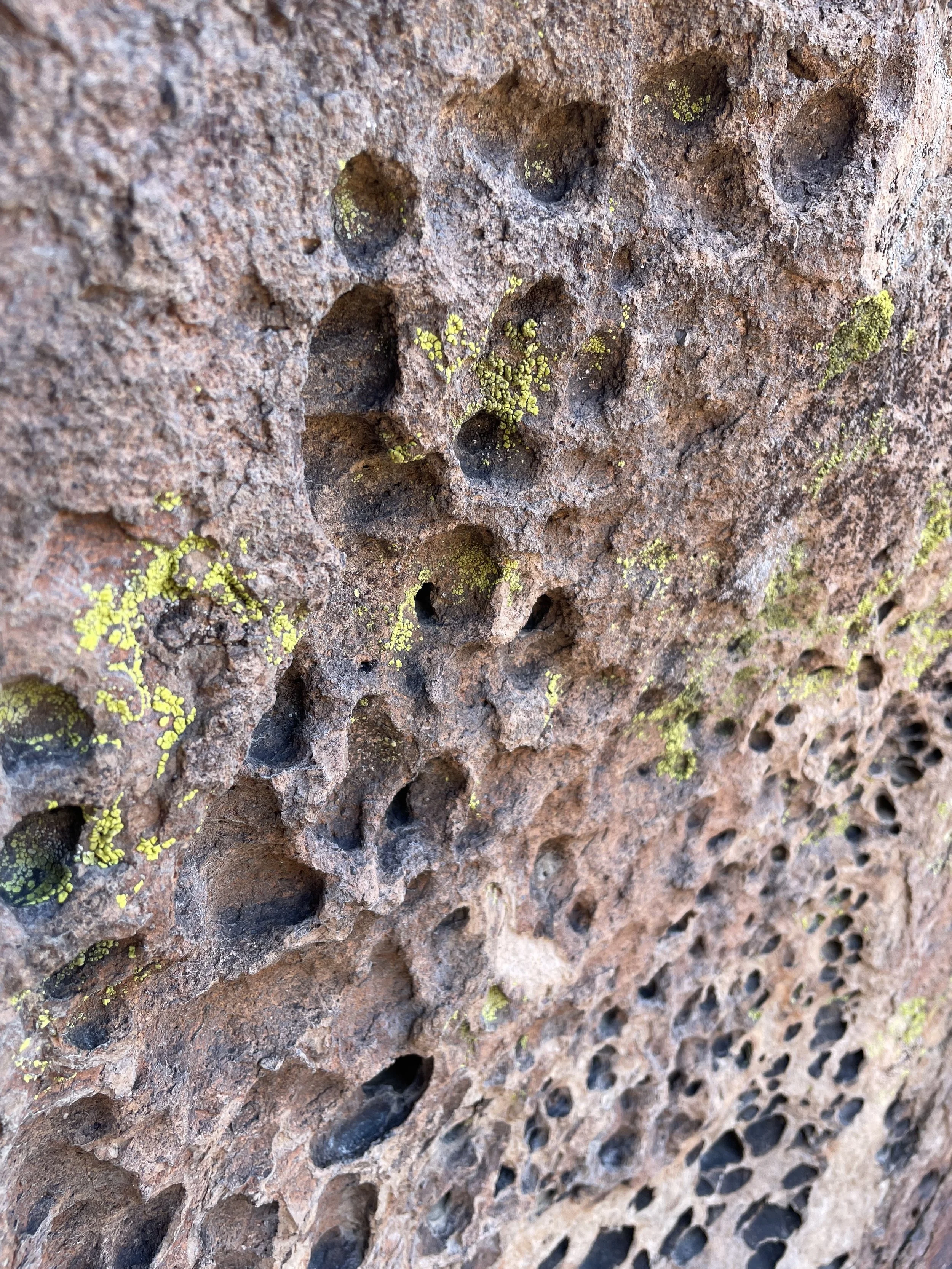
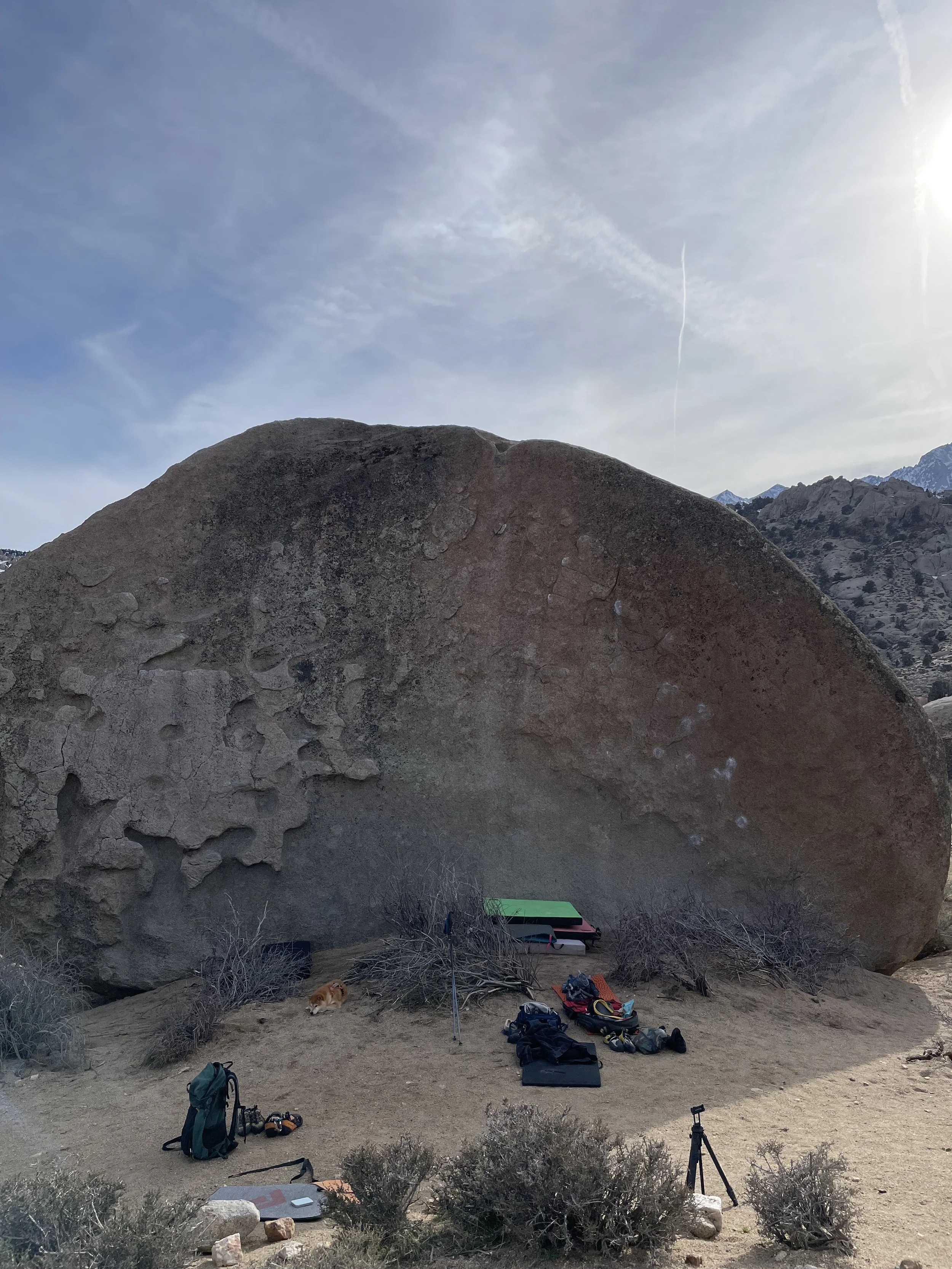
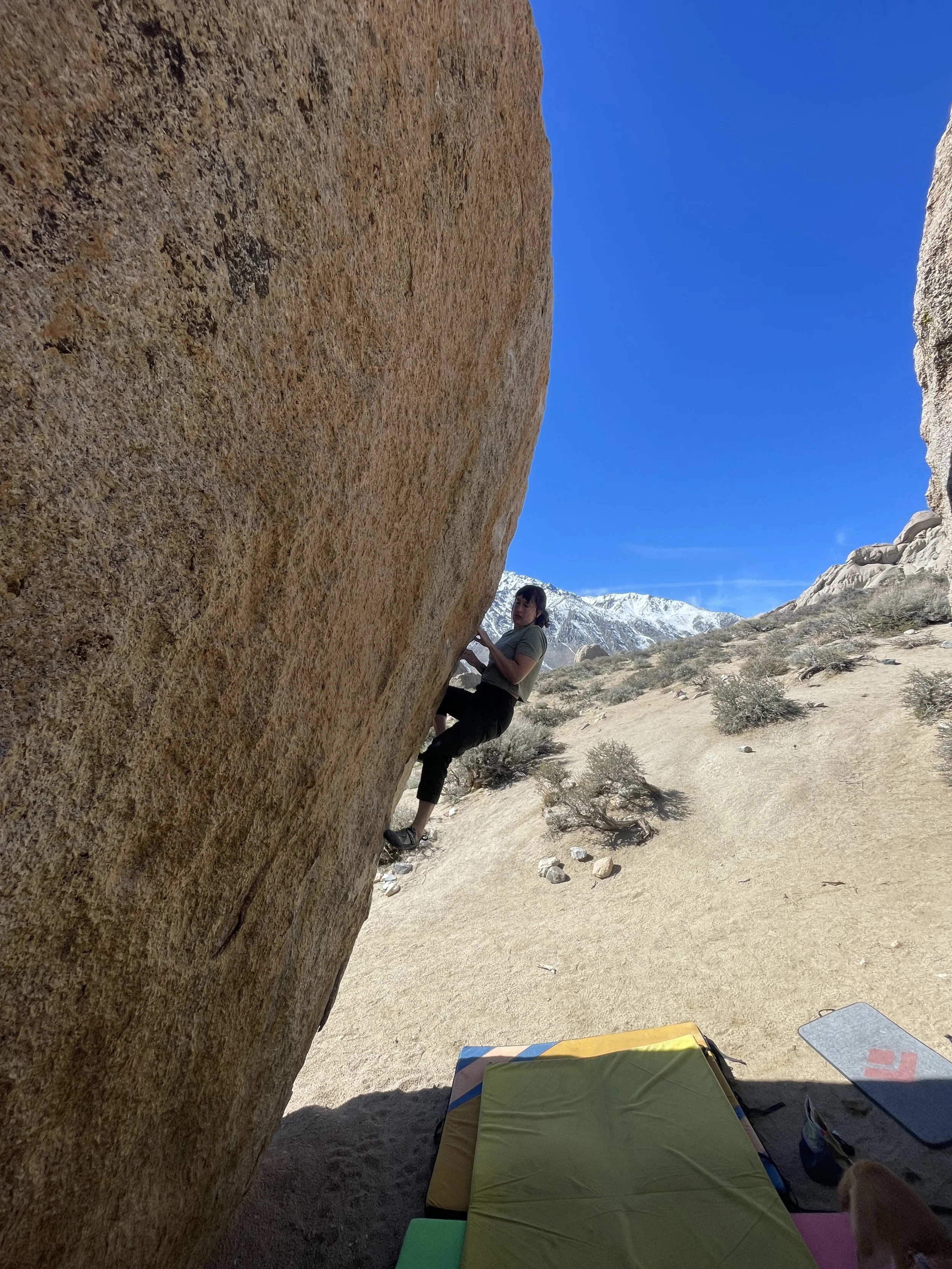
The sun at altitude radiates. The stone—volcanic, pocked, improbably sharp—demands intimacy with pain. Two fingers jammed into a pocket just wide enough to suggest hope, just narrow enough to remind you who’s in charge. Beta you’ve watched a hundred times on video must be executed now, and the rock is always steeper, sharper, larger, and more indifferent than the camera ever suggested. The giant round Peabodies sit out there like punctuation marks in the landscape. You circle them the way people circle famous paintings, trying to reconcile the familiar image with the very physical fact of the thing.
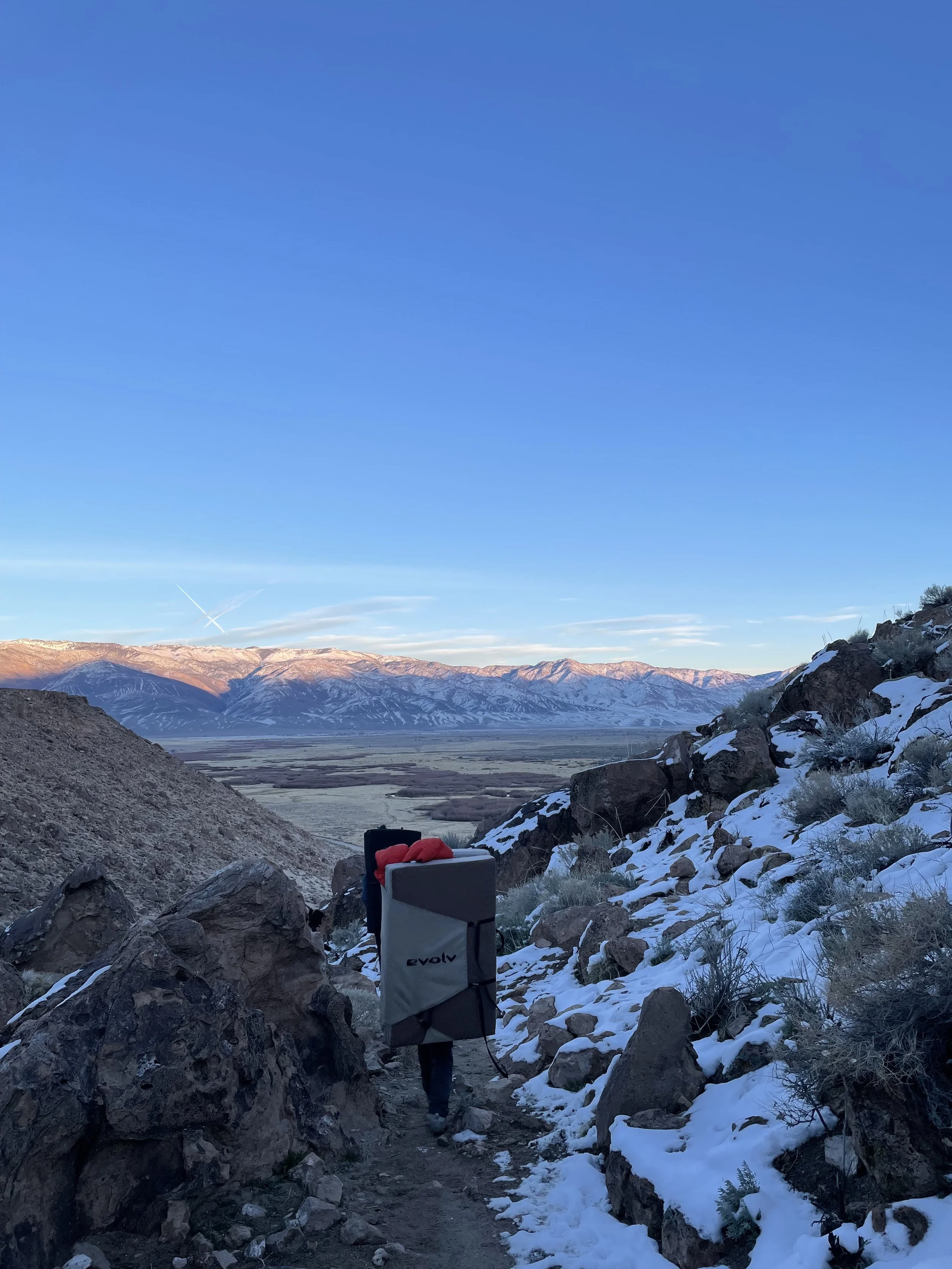
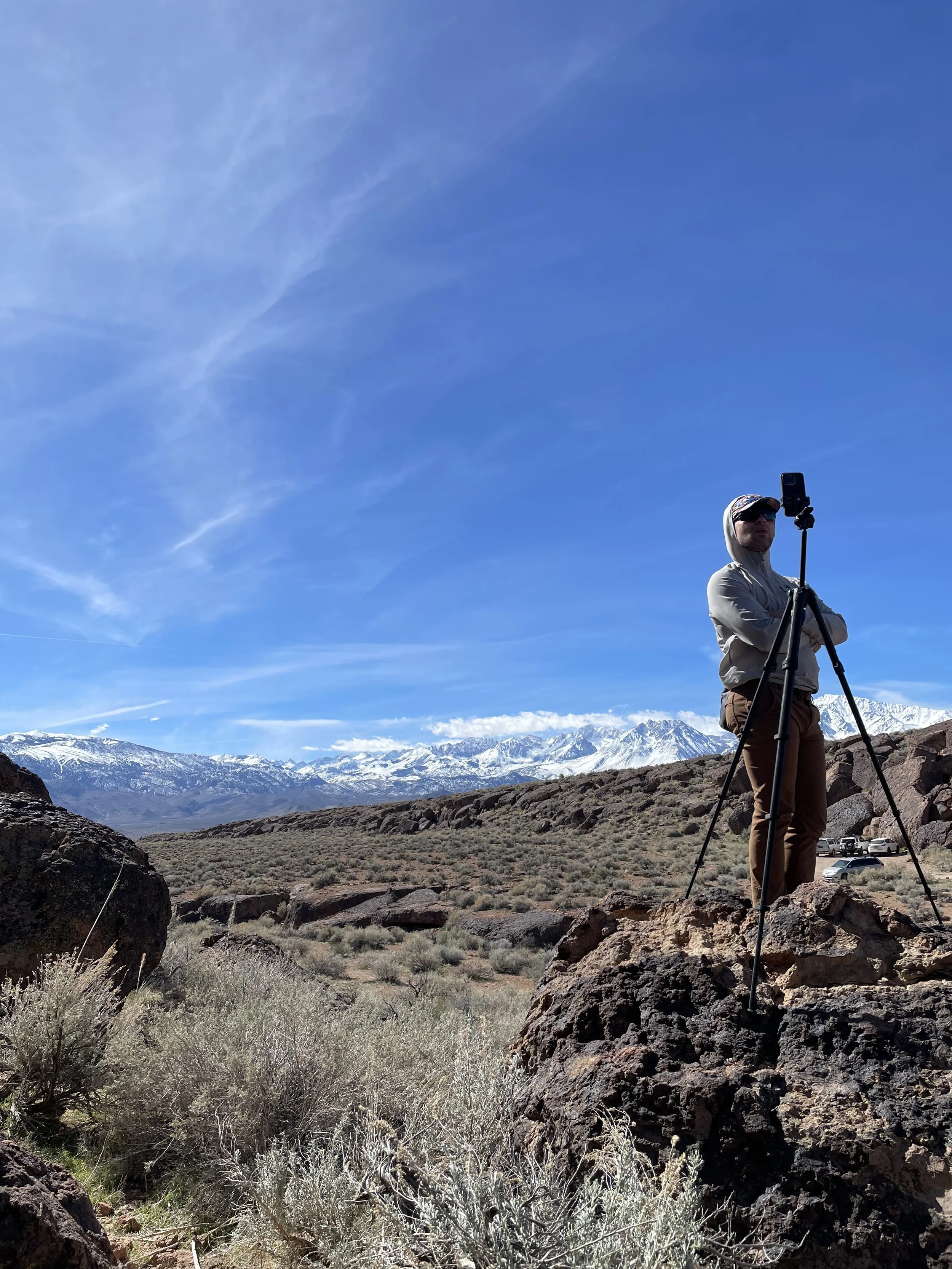
Dogs run off-leash and the owners unconcerned with the rules governing the space. Weekends bring the crowds: crash pads blooming across the buttermilks, climbers orbiting projects, vans, subarus, and pickups forming their temporary grid. There’s the pull of the place—the stone, the light—and the push of people trying to occupy the same small set of coordinates.
And, yes, people are hell.
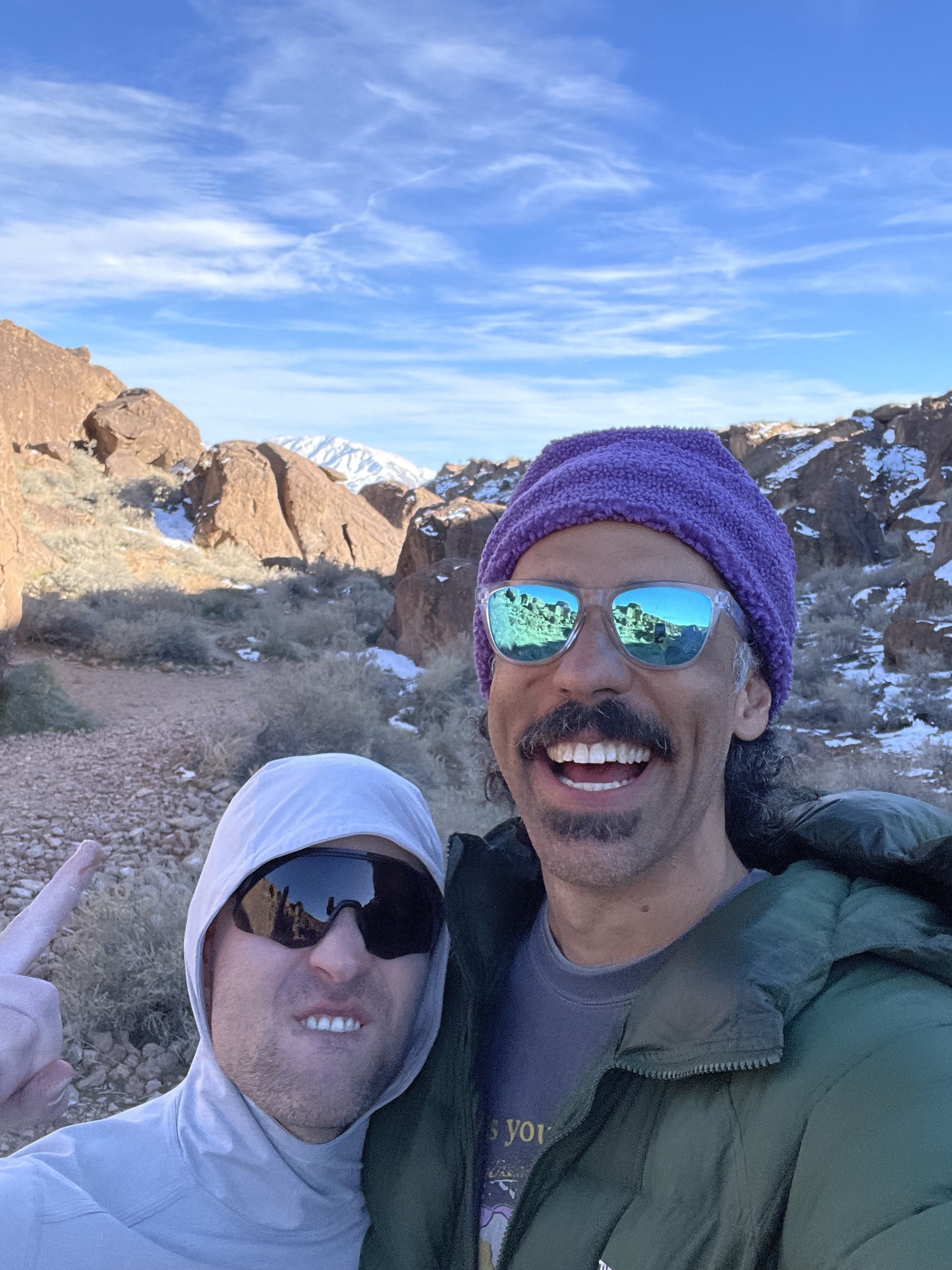
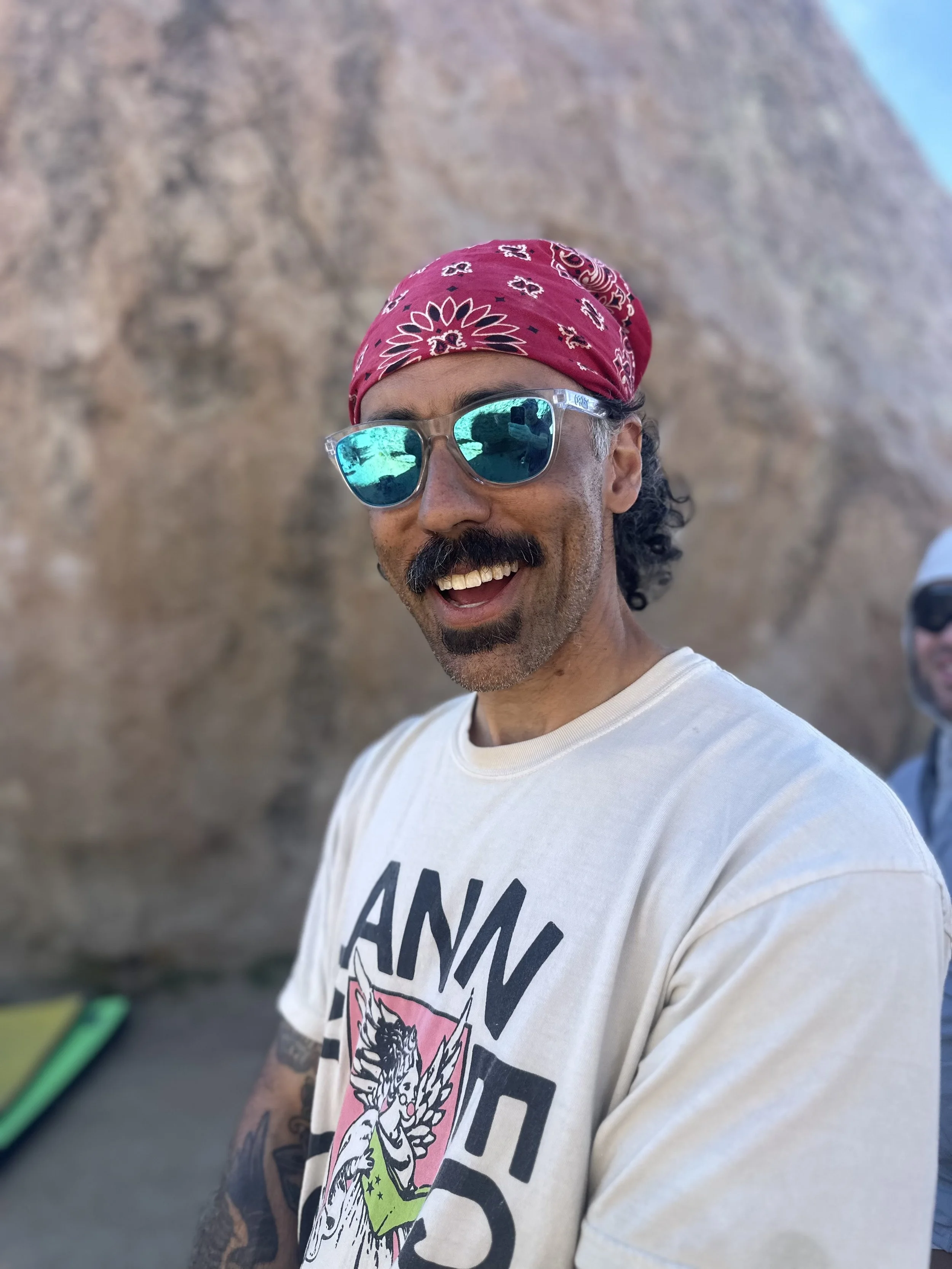
But the hell is intermittent. Between attempts, you find the small mercies: the laugh that follows a failed move, the particular warmth of sun on granite, the strange camaraderie of strangers spotting each other under a problem that might spit them out in two seconds. Peace arrives sideways.
One day, news from the real world slips through. But days spent outside, without signal, do something medicinal to the mind. The washboard roads alone—those endless corrugated miles that rattle your teeth and your suspension—have a way of shaking loose the background noise. You drive them slowly, involuntarily present.
Eventually, though, the arithmetic changes. Peanut butter runs out. Skin and finger tendons give their final protest. And somewhere along the way the gravitational pull of home—of hot showers, of people you chose rather than the ones randomly sharing a boulder field—begins to outweigh the abstract promise of one more problem, one more perfect day.
So you pack the truck. The last stop, it turns out, is rarely the last. But it is, at least for the moment, the end of the road. Time to head home.